

I want to be straight with you before you spend anywhere near what I paid for this thing: the Ninja Mega Kitchen System does not quietly replace three separate appliances the way the box photo implies, and I've had six months of near-daily use to figure out exactly which parts of that promise are real and which ones are marketing doing its job a little too well. I already wrote the long version of my six months with the Ninja, the smoothies, the dough, the durability. This is the shorter, blunter version, the one where I stop being polite about the parts that annoyed me.
My BL770 sits on the twenty-two inches of counter beside my sink in a 1940s duplex galley kitchen, and that's the lens for everything below. Not whether the Ninja Mega Kitchen System is powerful, it is, I've said so elsewhere and I stand by it, but whether the whole 'mega' promise is actually worth what it costs a small kitchen in storage, noise, and morning patience. It isn't a simple yes for everyone, and if you're the kind of shopper who reads past the star rating, I think you'll want the honest version.
The Quick Verdict
A genuinely strong blender with a food processor bowl bolted on that you'll use less often than the box implies, and a real storage cost in a small kitchen.
Amazon Check Today's Price →Before You Buy the 'All-in-One' Story, Read This
The Ninja Mega Kitchen System is a strong 1500-watt blender first and a food processor second. Here's what six months of honest, no-filter use actually looks like, including the parts nobody mentions.
Amazon Check Today's Price on Amazon →The Word 'Mega' Is Doing a Lot of Work
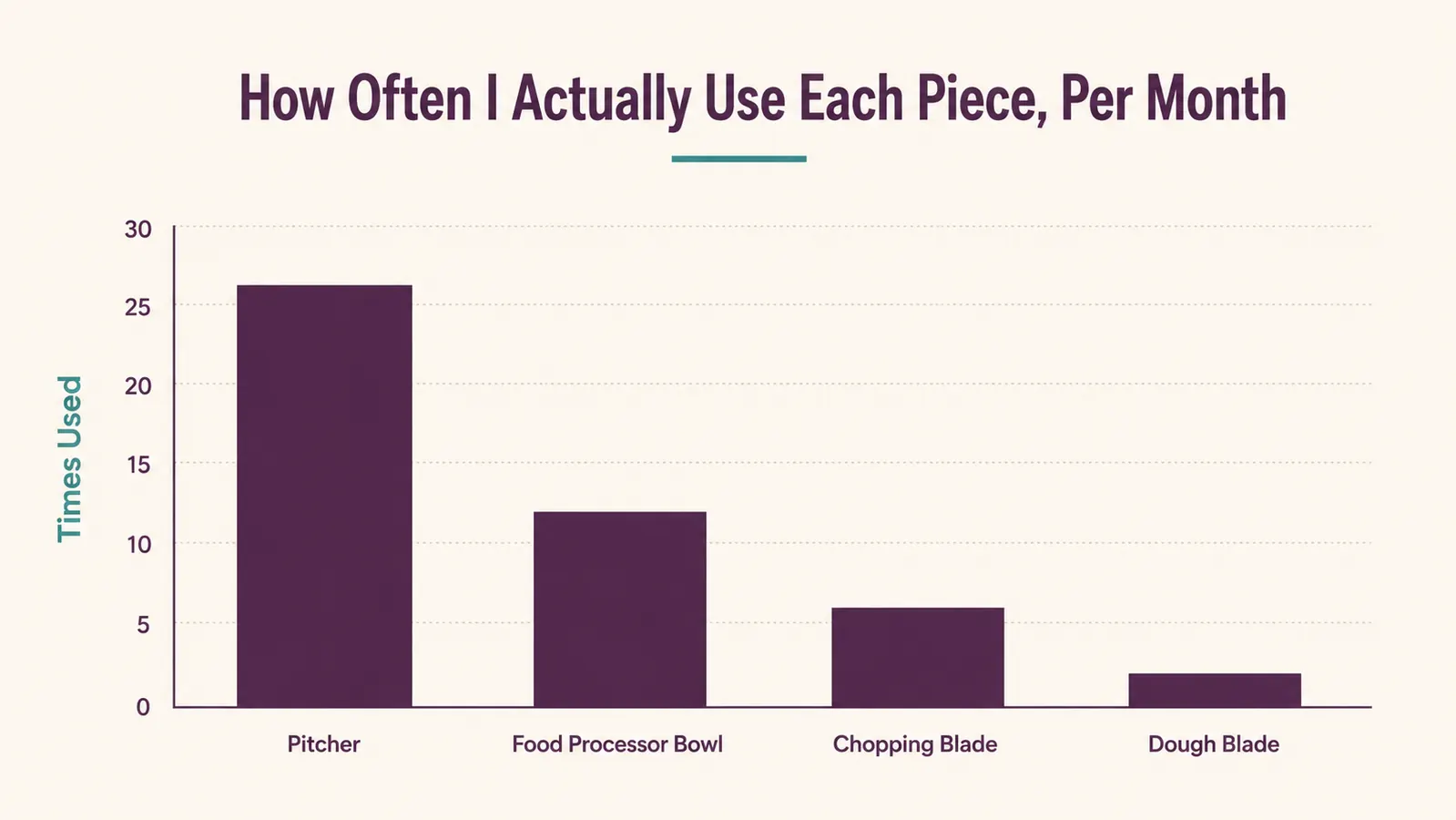
The Ninja Mega Kitchen System ships with a 72oz pitcher, an 8-cup food processor bowl, a dough blade, a chopping blade, and a couple of lids, and the marketing photo lines all of it up like you'll rotate through every piece with equal enthusiasm. Six months in, I can tell you that isn't how it actually goes. I use the pitcher every single day. I use the food processor bowl maybe six or eight times a month, mostly for shredding cabbage or pureeing hummus. The dough blade has come out of the box, by my honest count, four times total, and I've written up the full smoothie routine separately if you want the daily-use side of this.
That's not a knock on the machine's capability, it can genuinely do all of it. It's a knock on the framing. If you're buying the Ninja because you picture yourself making bread dough weekly, you probably won't, the same way a lot of people don't use the julienne attachment on a food processor they already own. Be honest with yourself about which two or three functions you'll actually reach for before you let the word 'mega' talk you into paying for five.
I'd also say the food processor bowl is the part most likely to sit unused if you're buying this purely as a blender upgrade. It's a genuinely capable bowl, better than the mini chopper I used to own, but if chopping and shredding weren't already part of your weekly cooking before you bought the Ninja, owning the bowl doesn't create that habit. It just gives you a bigger thing to store.
The chopping blade is the one attachment beyond the pitcher that's actually earned a permanent spot in my rotation, mostly because it covers the food processor bowl's real daily jobs, shredding, mincing, a quick puree. The dough blade, by contrast, is specialized enough that I've genuinely forgotten which bag it lives in more than once. If Ninja sold this exact system without it and knocked a little off the price, I don't think most owners, myself included, would notice the difference in how they actually cook week to week.
The Storage Tax Nobody Puts in the Marketing Photos
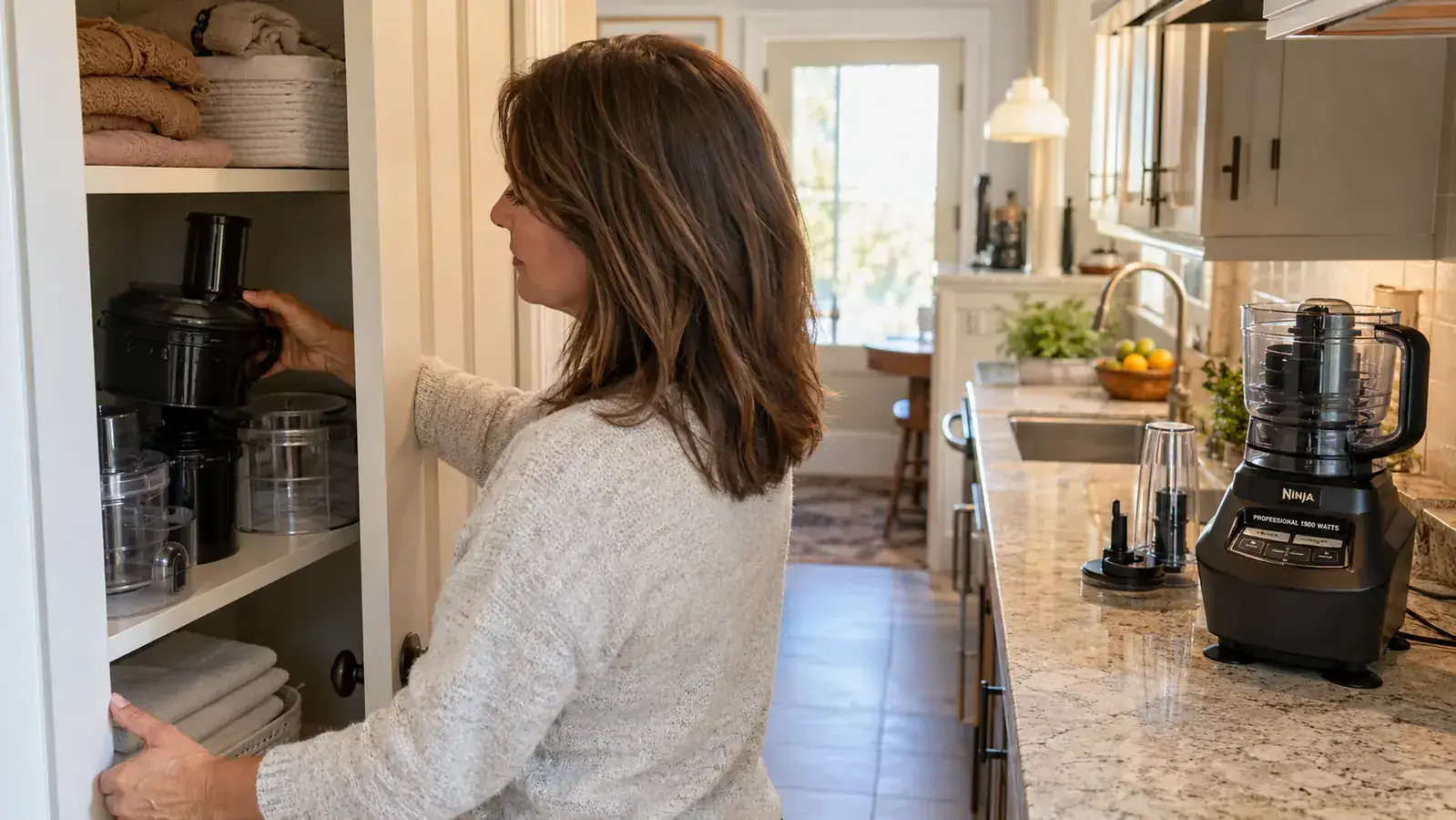
Here's the part I underestimated most before buying. The Ninja base is heavy enough that it lives permanently on my counter, but the 72oz pitcher, the food processor bowl, the dough blade, and the extra attachments don't fit anywhere near it, so they live in my hall closet, and the spare pitcher lid ended up on top of the fridge because there was nowhere else flat enough for it. I've mentioned that setup before, but here's the honest math on it: every time I want to switch from blending to processing, I'm opening a closet, finding the right bowl among folded towels, and carrying it back to the kitchen. That's maybe ninety seconds. It doesn't sound like much until you're doing it before coffee, several mornings a week, for six months straight.
This is the cost that never shows up in a five-star Amazon review, because it's not dramatic enough to complain about in one sentence. It's just a small, repeated tax on convenience, the exact thing a 'mega' all-in-one appliance is supposed to save you from. In a kitchen with generous cabinet space near the counter, this tax basically disappears. In a galley kitchen with twenty-two inches of counter and one hall closet doing double duty for appliances and linens, it's real, and I think a lot of buyers in small apartments don't account for it before they order one.
What I Actually Saved by Consolidating
Before the Ninja, I owned a stick blender that struggled with frozen fruit and a food processor that died the week before a holiday. Between the two, they took up close to the same total footprint the Ninja Mega Kitchen System takes up now, plus a second base I had to plug in separately and store separately. So the honest math on space isn't as simple as 'one appliance instead of two'. It's 'one appliance instead of two, if you actually replace both and don't just add the Ninja on top of what you already own'.
I did replace both, which is the only reason the trade worked out for me. If you're the kind of household that keeps the old blender in a cabinet 'just in case' even after buying something new, you haven't actually saved any space, you've just added a third appliance to store. That's worth being honest with yourself about before you buy, because the Ninja only pays off the way the marketing promises it will if you're willing to actually let go of what it's replacing.
How Loud It Actually Is, Living With Someone
I've written before about not running the Ninja before 7am out of respect for my downstairs neighbors. What I haven't said is how it plays inside my own apartment with my husband Paul still asleep or working from the other room. On ice, the Ninja Mega Kitchen System is loud enough that I've had to time my smoothie around whether Paul has an early call, because a blast of crushed ice through a thin duplex wall carries a lot further than I expected from an appliance review to prepare me for. It's not a complaint about the motor doing its job, a powerful blender is supposed to sound like it's working. It's a complaint about how little the listing tells you about what that actually means for two people sharing a small space.
For what it's worth, my old stick blender never bothered anyone in the apartment, it just couldn't crush ice properly. The Ninja can, and that power is exactly what makes it loud enough to derail a video call in the next room if the timing is off. I've learned to check whether Paul's on a call before I hit the pulse button, the same way you'd check before running a vacuum. It's a small habit now, but it isn't something I thought to ask about before I bought it, and I don't think most listings mention it either.
We've adjusted. Paul knows the sound now and mostly sleeps through it, and I've gotten faster at getting the loudest ten seconds over with instead of pulsing slowly. But if you're shopping for a blender for a studio or a one-bedroom where someone else is often still asleep or on a work call in the next room, I'd rather you know that going in than find out the first Monday morning you use it.
What the 'All-in-One' Promise Actually Requires From You
The honest version of the food processor claim is that it's real capability gated behind you actually wanting to use a food processor regularly. If you already made hummus, slaw, or pie dough by hand or with a separate machine before buying the Ninja, the 8-cup bowl will genuinely absorb that work and do it well. If you didn't, owning the bowl doesn't turn you into someone who suddenly shreds cabbage on a Tuesday. I was already that kind of cook, mostly, so it worked out for me. I'd be lying if I said it would work out the same way for someone buying this purely because the box promised to replace their food processor they never really used to begin with.
There's also a cost comparison worth being honest about. A plain quality blender alone often runs meaningfully less than the Ninja Mega Kitchen System, and a decent standalone food processor isn't free either. Buy both separately and you might spend close to the same total, sometimes more, while ending up with two full-size bases competing for the same twenty-two inches of counter. The Ninja's real value isn't that it's cheaper than owning both. It's that it's smaller than owning both, if you actually need both.
Then there's the pitcher lid gasket, which I mentioned starting to seep slightly after six months of daily washing. I bring it up again here for a different reason: it's a reminder that the more pieces a kitchen system has, the more individual points of failure you're managing. A single-purpose blender has one gasket to worry about. The Ninja has a pitcher gasket, a food processor bowl seal, and a base seam that all need their own attention over time. None of it has been a dealbreaker for me, but 'all-in-one' also means 'all the maintenance in one place', and that's worth knowing before you buy.

Who Should Just Buy a Plain Blender Instead
If I'm being fully honest, there's a real subset of buyers who would be happier with a plain, dedicated blender and no food processor bowl at all. If you make smoothies most days and rarely if ever chop, shred, or knead, a smaller single-purpose blender gives you nearly all the power you'd use from the Ninja Mega Kitchen System without the extra bowl, blade, and lid taking up hall closet space you might not have. You'll also save real counter footprint, since a smaller blender's base doesn't need the same clearance the Ninja's does once the pitcher is locked on.
The flip side is just as honest. If you cook enough that a food processor was already earning its keep in your kitchen, or you're trying to consolidate two aging appliances into one, the Ninja's combination genuinely pays for itself in counter space saved elsewhere, even accounting for the closet shuffle. I put together ten specific reasons the blending side alone has earned its place in my rotation, separate from the food processor question entirely, if that's the piece you actually care about.
What I Liked
- The 72oz pitcher is genuinely one of the more powerful blenders I've used at this price
- The food processor bowl is a real tool, not a token attachment, if you'll actually use it
- One base replaces two appliances for a cook who already used both regularly
- Motor hasn't slowed at all after six months of near-daily blending
Where It Falls Short
- The dough blade and some attachments sit unused for most owners, mine included most months
- Storing the pitcher, bowl, and blades separately is a real daily hassle in a small kitchen
- Loud enough that it affects other people in the apartment, not just downstairs neighbors
- More individual parts means more individual points of wear, including a pitcher lid gasket
- The all-in-one framing oversells how much of the kit an average buyer will touch weekly
The Ninja isn't dishonest about what it can do. It's just quiet about what it actually costs you to keep all of it within reach.
Who This Is For
This is the right buy for someone who blends most days and already does real food processor work, chopping, shredding, the occasional dough, on a semi-regular basis, not just in theory. It's also a fair trade for anyone consolidating two aging appliances into one base and who has a closet, a shelf, or a drawer somewhere to absorb the pieces that aren't on the counter that day. It's worth it, too, if you genuinely plan to replace, not just supplement, whatever blender or processor you already own, since that's the only way the space math actually works out. If daily smoothies are the main draw, I'd point you toward the step-by-step smoothie routine I run on the Ninja Mega Kitchen System to see exactly what that daily use looks like before you commit to the whole system.
Who Should Skip It
Skip the Ninja Mega Kitchen System if you're buying it mainly for the food processor bowl but rarely cook anything that needs one, that bowl will just become another thing gathering dust in a closet you don't have much of. Skip it too if your kitchen has less storage than my twenty-two inches and one hall closet, because the parts you're not actively using need somewhere to live, and that need doesn't go away just because the base looks tidy on the counter. And if quiet mornings matter more to you than raw blending power, a smaller, gentler blender will serve you better than fighting the Ninja's volume every day. Skip it, too, if you already know yourself well enough to admit the dough blade will sit in its bag untouched, since that's exactly what happened in my own kitchen most months. For the specific reasons I still reach for it despite all of that, I laid out ten of them in a separate piece, and they're worth reading before you decide either way.
Still Deciding After the Honest Version?
The blending power is real. The storage and noise tradeoffs are real too. If the daily smoothie routine is what you're actually after, the Ninja Mega Kitchen System still earns its spot on my counter six months in.
Amazon Check Today's Price on Amazon →