
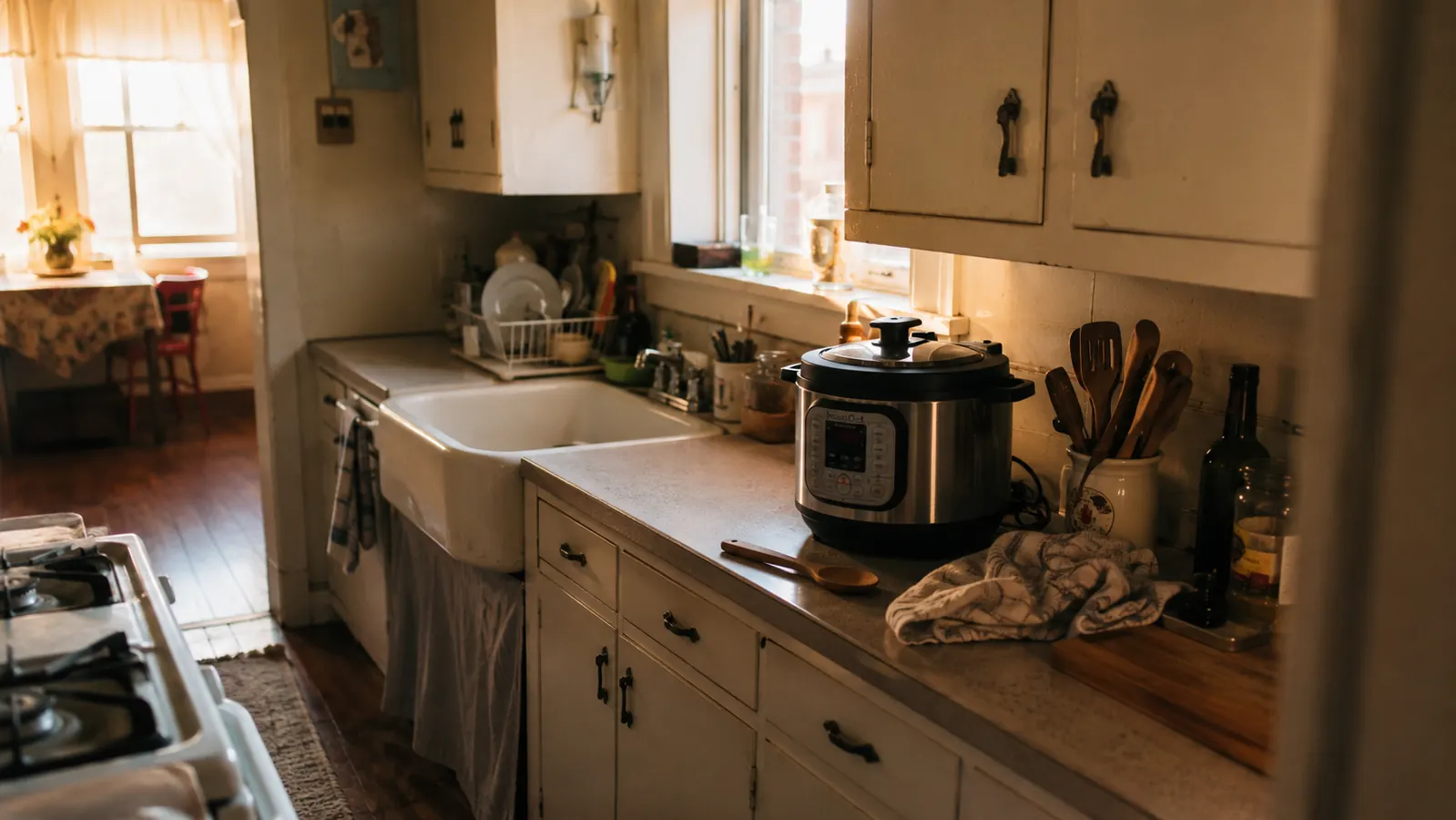
Six months ago I moved my Instant Pot Duo out of the hall closet for what I told myself was a two-week trial run of pressure cooking dried beans instead of canned. It never really went back. In a galley kitchen with twenty-two inches of usable counter beside the sink, that is not a small decision, because every appliance that lives out on that strip is one less inch I have for a cutting board.
I'm Nora Feldman, and I cook dinner most nights in the upstairs half of a 1940s duplex, which is a polite way of saying my kitchen was built for someone who mostly reheated things. The Instant Pot Duo, the 6-quart 7-in-1 model, has been on my counter or hauled out from the hall closet almost every day since. This is what six months of actually using it, not unboxing it, taught me.
The Quick Verdict
A genuinely useful pressure cooker for weeknight dinners, if you're willing to give up counter space and learn the Instant Pot Duo's quirks first.
Amazon Check Today's Price →Tired of babysitting a pot for an hour on a school night?
The Instant Pot Duo turns dried beans, whole chickens, and stubborn cuts of meat into weeknight-fast meals. See current availability and today's price before you decide.
Amazon Check Today's Price on Amazon →How I've Used It
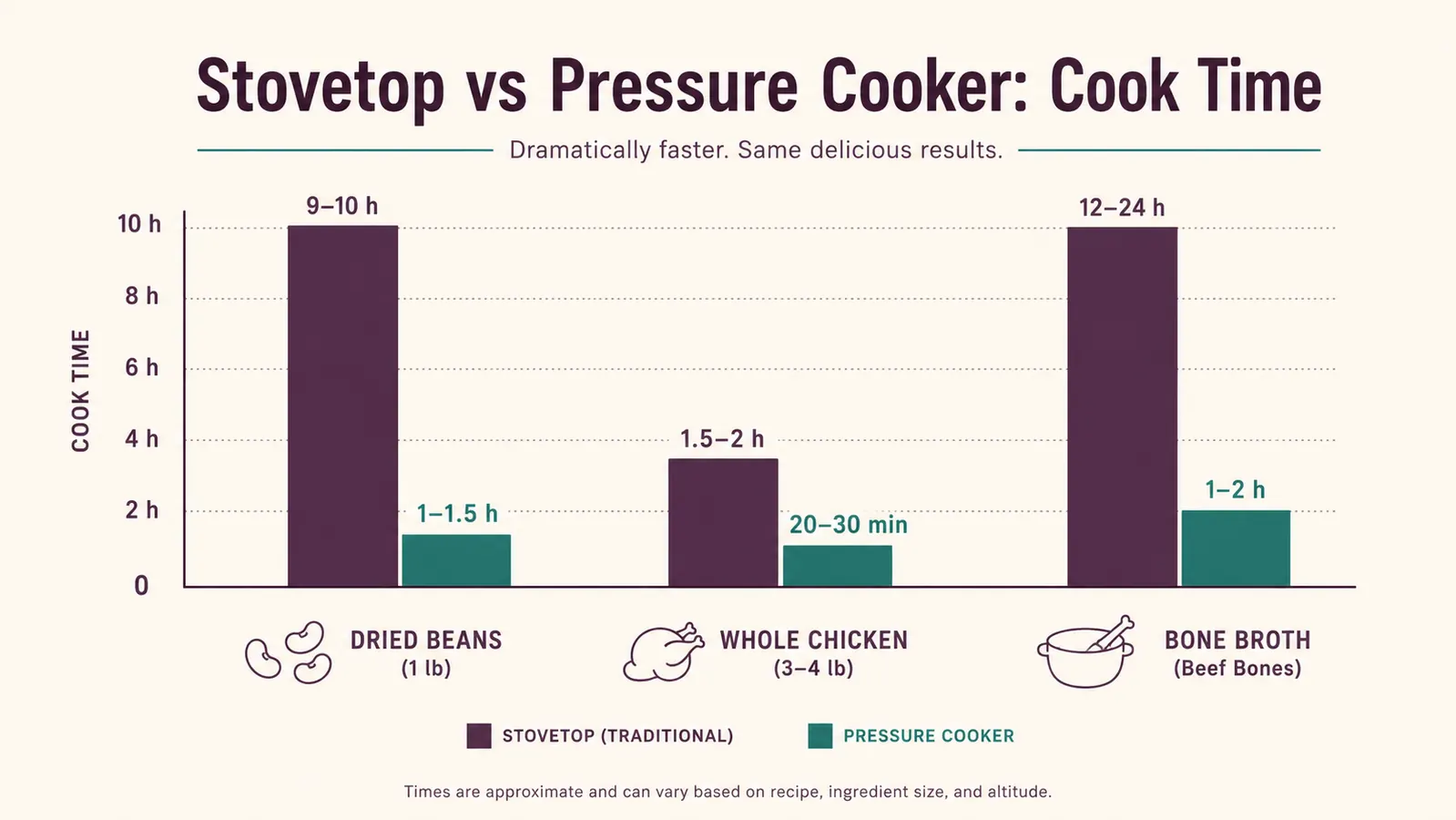
Most weeks, the Instant Pot earns its keep on three things: dried beans, weekday chicken and rice, and the Sunday pot of bone broth I make from whatever chicken carcass is left over. I stopped buying canned pinto beans almost immediately, because a pound of dried beans in the Instant Pot Duo, no soaking, comes out in about 45 minutes and costs a fraction of what the cans did. That's the kind of unglamorous, repeated win that actually changes how I shop, not a single showy meal.
Weeknight chicken and rice happens more often than I want to admit, usually on the nights I've forgotten to plan anything else. I brown the thighs on the sauté setting, dump in rice and broth, and walk away for twenty minutes while I deal with whatever has piled up on the kitchen table. The difference between this and a slow cooker is real: a Crock-Pot needs hours of lead time I usually don't have on a Tuesday.
Sunday broth is the other constant. I don't measure carefully anymore, I just fill the inner pot with bones, an onion end, a couple of carrots, and water to the max line, and set it for pressure cook. Ninety minutes later I have broth that would have taken most of an afternoon on the stove. That's the trade I keep making with the Instant Pot Duo: less babysitting a pot, more doing something else while dinner happens on its own.
Grains show up more than I expected too. A cup of steel-cut oats with the right ratio of water, set on manual for four minutes with a natural release while I get everyone dressed, means breakfast is done before I've finished making coffee. It's not glamorous, but it's the difference between oatmeal on a Tuesday and cereal because nobody had time.
What the Instant Pot Actually Does Well
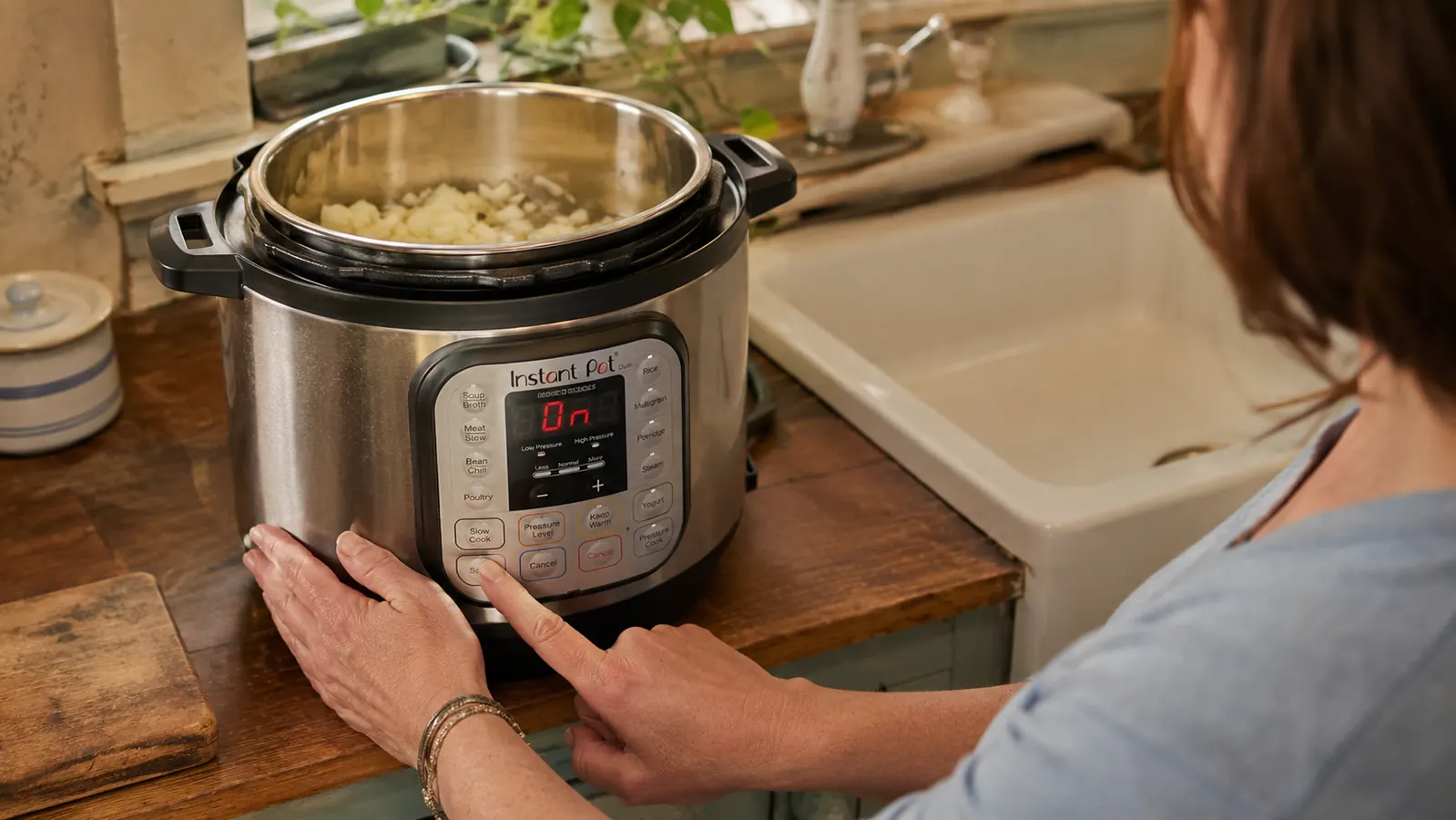
The sauté function is the feature I undersell when people ask about the Instant Pot Duo, because it means I'm not dirtying a separate pan before pressure cooking starts. I can brown onions and garlic right in the same steel insert, deglaze with a splash of broth, then lock the lid and switch to pressure cook. One pot, one thing to scrub after.
Speed is the obvious selling point and it holds up. Dried chickpeas that used to mean an overnight soak and an hour on the stove are done in under 40 minutes, start to finish, in the Instant Pot. The rice setting is genuinely consistent, better than my old stovetop method where I'd get scorched bottoms about once a month.
The steam function turned out to be a quiet favorite. Eggs come out easy to peel almost every time, which sounds small until you've spent years fighting a stubborn shell over the sink. I also use the trivet for steaming vegetables when I want something that isn't swimming in butter, and it takes about a third of the time a steamer basket on the stove would.
I use the yogurt setting maybe once every couple of months, mostly because incubating yogurt for eight hours means committing counter space I usually need for something else. It works fine when I do it. It's just not part of my regular rotation the way the pressure cook and sauté functions are.
The Counter and Outlet Problem
Here's the part nobody mentions in the marketing photos: the Instant Pot Duo is heavy, and it takes up real estate I don't have much of. My twenty-two inches of counter beside the sink is already fighting for space with a dish rack and a cutting board, and a 6-quart pressure cooker eats a good chunk of that strip whenever it's out.
The outlet situation makes it worse. I've got one outlet cluster beside the sink that the Instant Pot, the toaster, and my coffee maker all have to share, and there are mornings I've had to unplug the coffee maker to get the Instant Pot going for a batch of oatmeal. It's a small annoyance that repeats itself often enough to notice.
Some weeks I leave it out on the counter for days at a stretch, especially during a run of soup-and-beans dinners, and just accept the clutter. Other weeks, usually when I need the counter clear for something else, it goes back to the hall closet shelf, which means hauling a heavy appliance up and down more often than I'd like.
There's also a footprint issue once the lid is off. The Instant Pot Duo needs somewhere to set the lid down while it's pressure cooking, and on twenty-two inches of counter that usually means balancing it against the backsplash or setting it in the sink, which isn't ideal when I'm also trying to wash vegetables for whatever comes next.

Cleanup, the Sealing Ring, and the Little Annoyances
Cleanup is mostly fine. The inner steel pot goes in the sink same as any pot, though it's deep enough that it doesn't fit well in my small basin and I end up washing it at an angle. The lid has more parts than I expected the first time, the steam release valve and the little float pin both need a wipe-down or they get sticky.
The sealing ring is the genuine complaint. It holds onto smells, so if I make something with a lot of garlic or curry one night and yogurt or oatmeal the next morning, I can taste the ghost of dinner in my breakfast unless I swap rings or give it a real scrub with baking soda. I now keep a second ring just for sweeter recipes, which is a workaround, not a fix.
The condensation collector on the back is another small thing that catches people off guard. It fills with water during a cook and needs to be emptied and rinsed, and if I forget, it eventually drips down the back of the unit and onto the counter behind it. It's a two-second job once you remember it exists, but forgetting it the first few times left a damp ring on that strip of counter more than once.
None of this is disqualifying. It's just the kind of daily friction the Instant Pot doesn't advertise, showing up only after months of actual rotation, not a single test run.
Accessories and Small Additions I've Made
Somewhere around month two I bought a glass lid that fits the inner pot, mostly so I could use the Instant Pot Duo as a plain sauté pan or simmering pot without needing the pressure lid locked on. It sounds like a small thing, but it means I don't have to fully seal and unseal the unit for a five-minute simmer, which used to feel like overkill.
I also picked up heat-resistant mitts specifically for handling the inner pot when it comes out full of hot broth, since the stock mitts I already owned weren't quite long enough to keep my wrists clear of the rim. It's a small fix for a real problem, and I wish I'd bought them in week one instead of month two.
The one thing I haven't bothered with is a second inner pot. I've seen other Instant Pot owners keep two so they can start a second batch while the first cools, but with one 6-quart pot and twenty-two inches of counter, I genuinely don't have anywhere to put a second one, even in the hall closet.
Six Months In: What's Held Up and What Hasn't
Mechanically, the Instant Pot Duo has held up fine. The lid still seals properly, the display still reads clearly, and I haven't had a single failed pressure cook in six months of near-daily use. That matters more to me than any single feature, because a pressure cooker that doesn't seal is just an expensive stockpot.
The exterior has picked up a few scuffs from being hauled in and out of the hall closet, and the plastic housing around the control panel has some water spotting I haven't managed to get off. I replaced the sealing ring once, around month four, mostly out of caution rather than because the old one had actually failed.
What hasn't held up as well is my own patience with the natural release cycle. Some recipes want a slow, fifteen to twenty minute natural pressure release before you can open the lid, and on a night when dinner is already running late, that wait can undo a lot of the time the Instant Pot saved earlier in the cooking process.
The one part I keep an eye on is the anti-block shield inside the lid, the little cap that keeps food from clogging the steam release. It's come loose during cleaning a couple of times, and I've had to remind myself to check it's snapped back in before I lock the lid, because an Instant Pot that isn't sealed properly just simmers instead of actually building pressure.
What I Liked
- Cooks dried beans and grains without soaking or babysitting
- Sauté function means fewer pans to wash
- Consistent rice results, no scorched bottoms
- Held up mechanically through six months of near-daily use
- Cuts real time off Sunday broth and weeknight chicken and rice
Where It Falls Short
- Heavy and awkward to move in and out of storage
- Sealing ring holds onto strong smells like garlic and curry
- Shares one outlet cluster with the coffee maker and toaster
- Natural pressure release can add 15-20 minutes when a recipe calls for it
- Takes up a real chunk of a twenty-two inch counter when left out
The Instant Pot Duo didn't change my life. It just meant fewer nights standing over a pot I couldn't walk away from.
Who This Is For
If you're cooking real dinners on a weeknight timeline and you're willing to give up some counter space for it, the Instant Pot Duo earns its spot. It's especially good if beans, rice, broth, or braises are already part of your rotation, because those are exactly the dishes where pressure cooking saves the most real time. Anyone comparing it against a slower option should read the side-by-side with a Crock-Pot before deciding, since the two solve different problems.
It's also a good fit if you already lean on a slow cooker but keep running out of lead time. The Instant Pot Duo does most of what a slow cooker does, just compressed into a fraction of the hours, and the sauté step means you're not dirtying a skillet first.
Who Should Skip It
If your counter is already full, or you don't have a spare outlet to dedicate to it regularly, think hard before adding a 6-quart Instant Pot to the mix. It's also not the right buy if you mostly cook single portions or rarely plan dinner more than an hour ahead, since a lot of its advantage comes from batch cooking beans, grains, and broth you'll use across several meals. For a broader list of what it actually saves you in practice, the ten reasons it cuts weeknight time lays it out dish by dish.
I'd also think twice if you're someone who hates reading a manual before using a new appliance. The Instant Pot Duo has a learning curve in the first couple of weeks, mostly around pressure release timing and altitude adjustments, and it rewards patience more than instant intuition.
Ready to stop planning dinner around a slow cooker's head start?
Six months of near-daily use later, the Instant Pot Duo still handles my weeknight rotation without complaint. Check today's price and current availability on Amazon.
Amazon Check Today's Price on Amazon →