
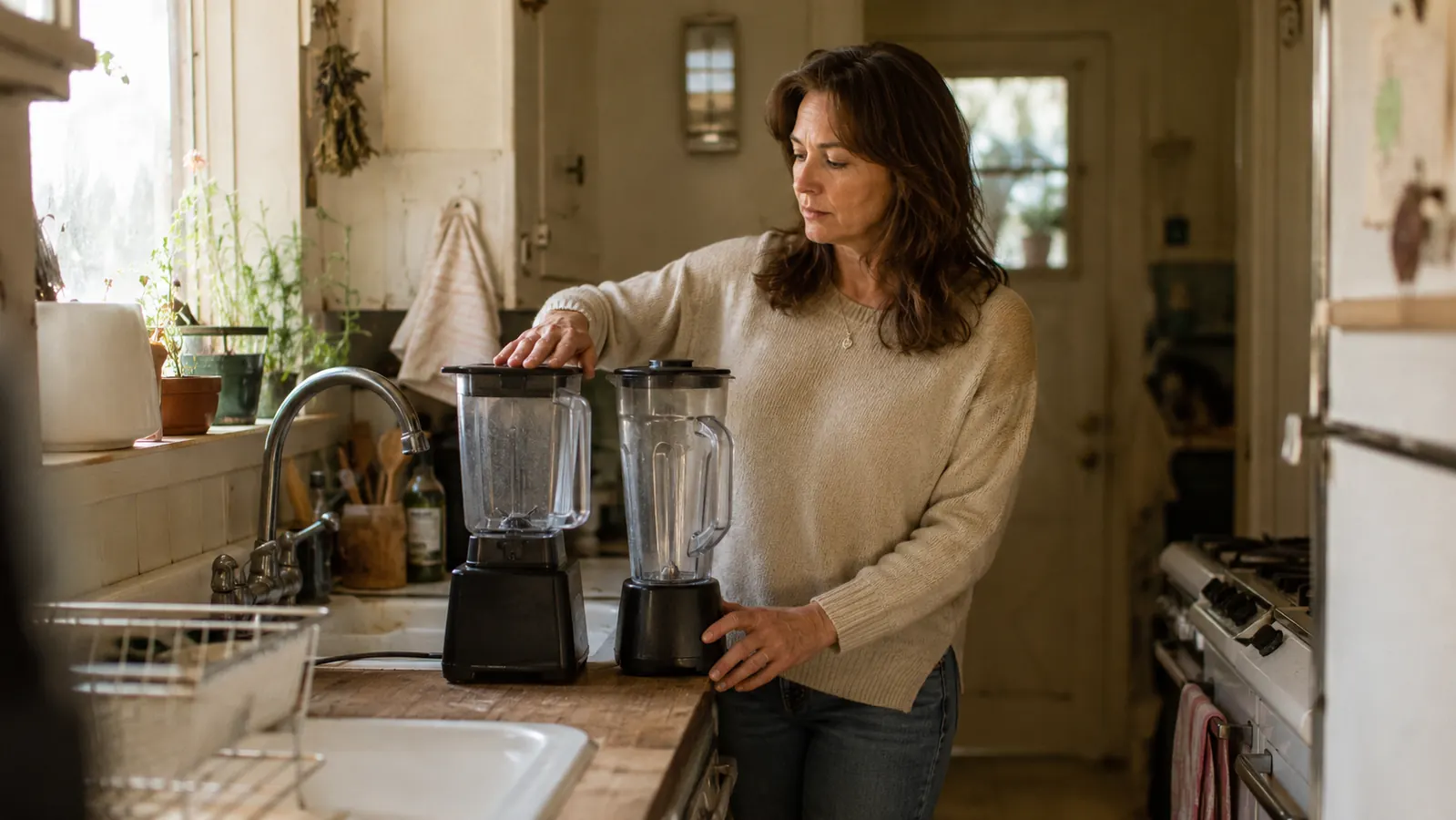
Short answer first, because I asked myself this exact question before I bought either one: if you want the single best blender you can put on a counter, the Vitamix wins that fight, and I'm not going to pretend otherwise. If you want one machine that blends a daily smoothie and also handles the food processor work I used to do with a second appliance, the Ninja Mega Kitchen System is the one that actually earns its keep on my twenty-two inches of counter. I looked hard at a Vitamix before I bought my BL770, and the decision came down to something more practical than raw blending power, which is exactly what this comparison is about.
My husband Paul and I are a two-person household, and our galley kitchen in a 1940s upstairs duplex doesn't have room to keep a dedicated blender and a dedicated food processor both sitting out. One outlet cluster beside the sink has to serve whatever I'm running that morning. That constraint shaped this comparison more than any spec sheet did, and I think it's the constraint most small-kitchen cooks are actually working under, whether they realize it yet or not. So this isn't a lab test of which motor spins faster. It's what I found out weighing both machines against a real counter and a real budget.
| Feature | Ninja Mega Kitchen System | Vitamix Classic |
|---|---|---|
| What's Included | 1500W base, 72oz blending pitcher, 8-cup food processor bowl, and a dough blade in one box | A blender base and pitcher only, no food processor bowl included |
| Motor Power | 1500 watts | Higher rated horsepower on most Classic-series models, built for nonstop daily blending |
| Green Smoothie Texture | Crushes frozen fruit and ice well, but can leave small flecks in fibrous greens like kale stems | Purees fibrous greens and stems noticeably smoother, closer to silk than slush |
| Hot Soup From Blending Alone | Not built to heat soup through friction, I finish mine on the stove | Can bring soup to a steaming finish from blending friction alone, no stove needed |
| Tamper Control | No tamper, relies on pulse and the pitcher's fin design to keep thick blends moving | Includes a tamper stick to push thick mixes into the blades while the motor runs |
| Food Prep Beyond Blending | 8-cup food processor bowl handles shredding, dough, and chopping | Blending only, no food processor function |
| Counter and Storage Footprint | More pieces to store, base plus food processor bowl plus two blades | Fewer parts, a narrower single-pitcher footprint that tucks into a smaller square of counter |
| Warranty | 1-year limited warranty | Longer standard warranty, reflecting its reputation for surviving years of daily heavy use |
| Value for a Two-Person Kitchen | One base covers both daily blending and occasional food prep for two people | Excellent blending only, a second machine is still needed for food processing |
Where the Ninja Mega Kitchen System Wins
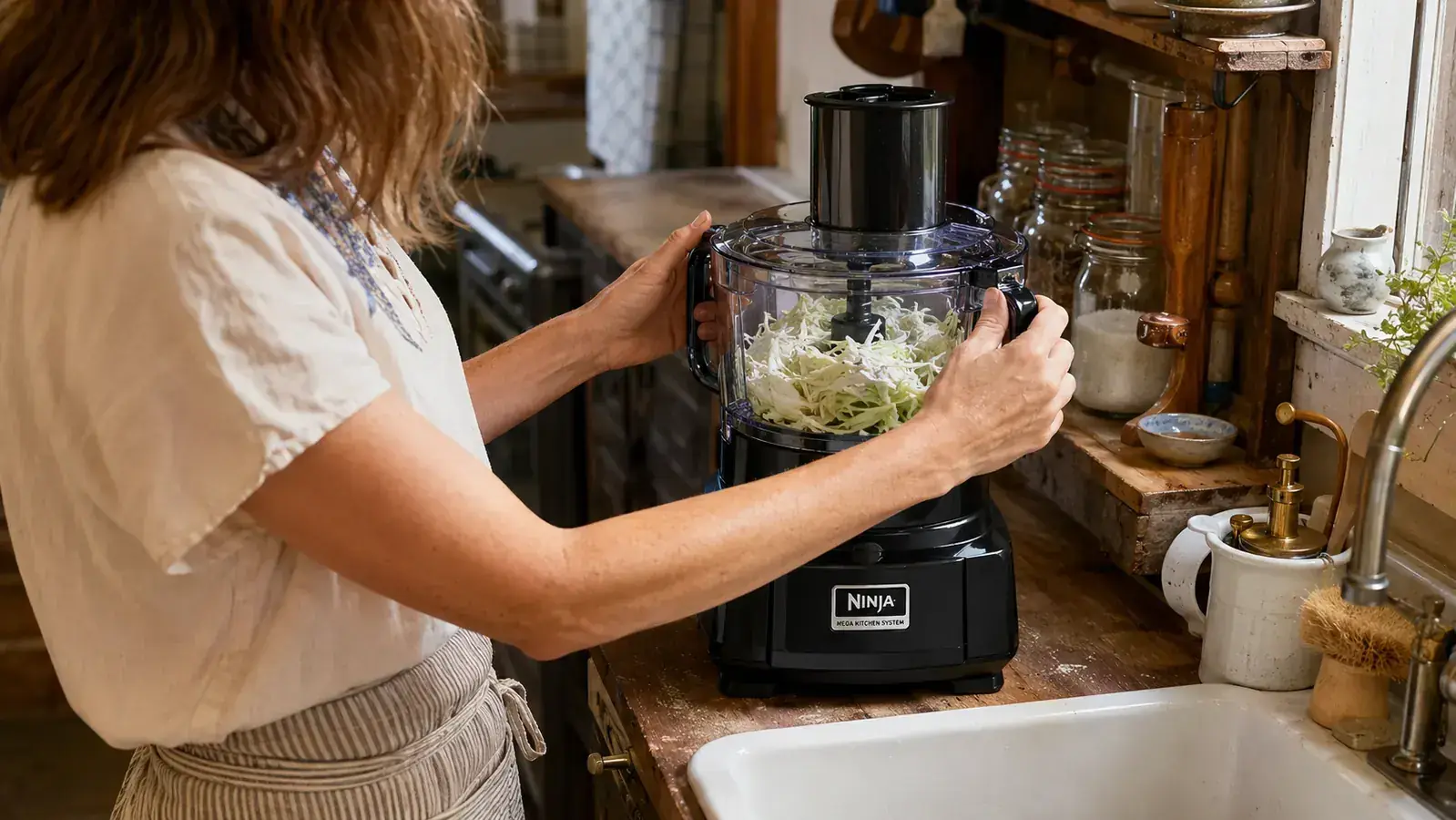
The Ninja Mega Kitchen System wins on what it replaces, not on raw blending horsepower, and that's the honest way to say it. One 1500-watt base runs the 72oz pitcher for my weekday smoothies and swaps to the 8-cup food processor bowl for pie dough, hummus, and shredding a head of cabbage for taco night. I used to own a separate blender, a separate food processor, and a mini chopper for garlic. The Ninja replaced all three, and that's three fewer boxes competing for space in my hall closet.
That matters more in a small kitchen than it sounds like on paper. A Vitamix is a phenomenal blender and nothing else. If Paul and I bought one, we'd still need a food processor for dough and slaw, which means two appliances fighting for the same twenty-two inches instead of one. The Ninja's food processor bowl is a real reason I've cross-checked when I wrote up how it holds up after six months in my honest review of the Ninja Mega Kitchen System, and the food processor bowl was the single detail that kept coming up as the difference-maker for a household our size.
Where the Vitamix Wins
Credit where it's due. The Vitamix is the better pure blender, full stop. Owners I've talked to describe a smoother finish on fibrous greens, the kind of thing that shows up when you blend kale stems or celery and the Vitamix leaves almost nothing behind while a lesser blender leaves small flecks. The tamper is a real advantage too, a stick that lets you push a thick peanut butter smoothie or a stiff nut butter down into the blades while the motor keeps running, instead of stopping to scrape the sides the way I sometimes have to with the Ninja.
The Vitamix also has a longer-standing reputation for build quality and a warranty that runs well past the Ninja's one year, which speaks to a machine engineered for years of continuous, near-commercial use. And it can heat soup to a steaming finish through blending friction alone, no stove required, something the Ninja simply isn't built to do. If blending is genuinely the only job you need done, and you have a separate spot for a food processor, that build quality and that finish on hard-to-puree ingredients are real reasons to pay for a Vitamix instead.
One Base, Two Jobs, Zero Extra Boxes to Store
The Ninja Mega Kitchen System won't out-blend a Vitamix on kale stems, but it comes with a 72oz pitcher and an 8-cup food processor bowl in the same box, which is the argument that actually matters when you only have one stretch of counter and one budget.
Amazon Check Today's Price on Amazon →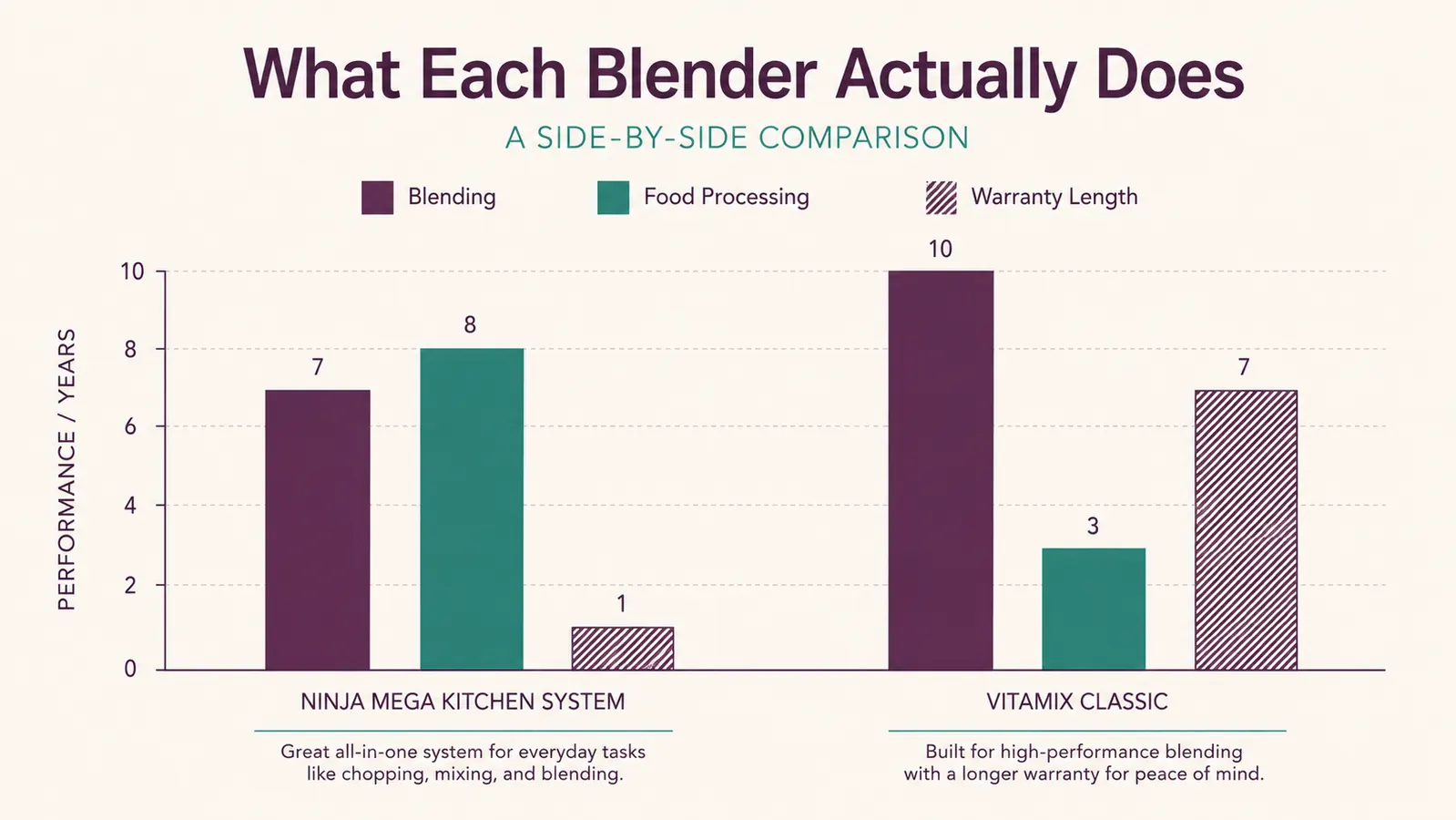
The Food Processor Factor Nobody Puts on the Spec Sheet
This is the part that decided it for me, and it's the part most head-to-head comparisons skip because it isn't really a blender question. A Vitamix, no matter which Classic model you land on, is a pitcher on a motor base. That's the whole appliance. The Ninja Mega Kitchen System is a pitcher on a motor base plus an 8-cup food processor bowl and a dough blade, which means the same 1500-watt motor that crushes my morning ice also shreds cabbage for slaw and mixes a small batch of pie dough on the weekend.
I priced this out honestly before I bought. Adding a food processor to a Vitamix purchase means buying and storing a second machine, which in my kitchen means a second box competing for space on top of the fridge or in the hall closet. The Ninja bundles that function in with the blender itself. It's not a better food processor than a dedicated Cuisinart, and I won't claim it is, but it's a real one, not a garnish chopper bolted on for the marketing copy.
Where this shows up in real cooking: I made a rough almond butter and a cashew queso for a game night using the food processor bowl, tasks a Vitamix simply can't do without a separate machine sitting next to it. Paul asked me once why I didn't just get "the fancy blender everyone talks about," and the honest answer was that the fancy blender would have solved one problem and left the other one, the food processor, completely unsolved.
It also changes how I plan a cooking session, not just what fits on the counter. If I'm making a smoothie and prepping slaw for the same dinner, I'm switching attachments on one base instead of clearing counter space for a second appliance and washing two separate motor housings by the end of the night. That's a small thing on any single evening, but it adds up over six months of actually cooking dinner in a kitchen this size.
Price and Long-Term Value
I won't quote a specific dollar figure for either machine here, because today's price moves and I don't want to write down a number that's wrong by the time you're reading this. But in relative terms, a Vitamix Classic sits well above the Ninja Mega Kitchen System, and that gap reflects a real difference in what you're buying: a machine built for years of hard commercial-style use, backed by a warranty that runs longer than the Ninja's one year. You're paying for a longer service life on the blender itself, not for anything extra in the box.
The math changes the moment you need a food processor too. Buy the Vitamix and you're still shopping for a second machine to shred cabbage or knead a small dough, which means a second price tag added onto the first one before your kitchen can do everything mine does. Buy the Ninja and that second purchase is already inside the box you brought home. For Paul and me, on a fixed household budget and twenty-two inches of counter, paying less once for one machine that does both jobs made more sense than paying more for a machine that only does one of them, even knowing that one job would be done slightly better.
Noise, Counter Footprint, and the Outlet Cluster
Both machines are loud at full speed on ice, that's just physics for a motor strong enough to crush it, and I wouldn't pick a winner here. Where the two diverge is footprint and parts. The Vitamix pitcher-and-base combination is narrower and easier to tuck into a small square of counter, which is a genuine point in its favor if all you're doing is blending. The Ninja's base is wider once the food processor bowl and its blades are added to the picture, and I keep the extra pieces, the bowl, the dough blade, the spare pitcher lid, stored separately because there's no room to leave them out.
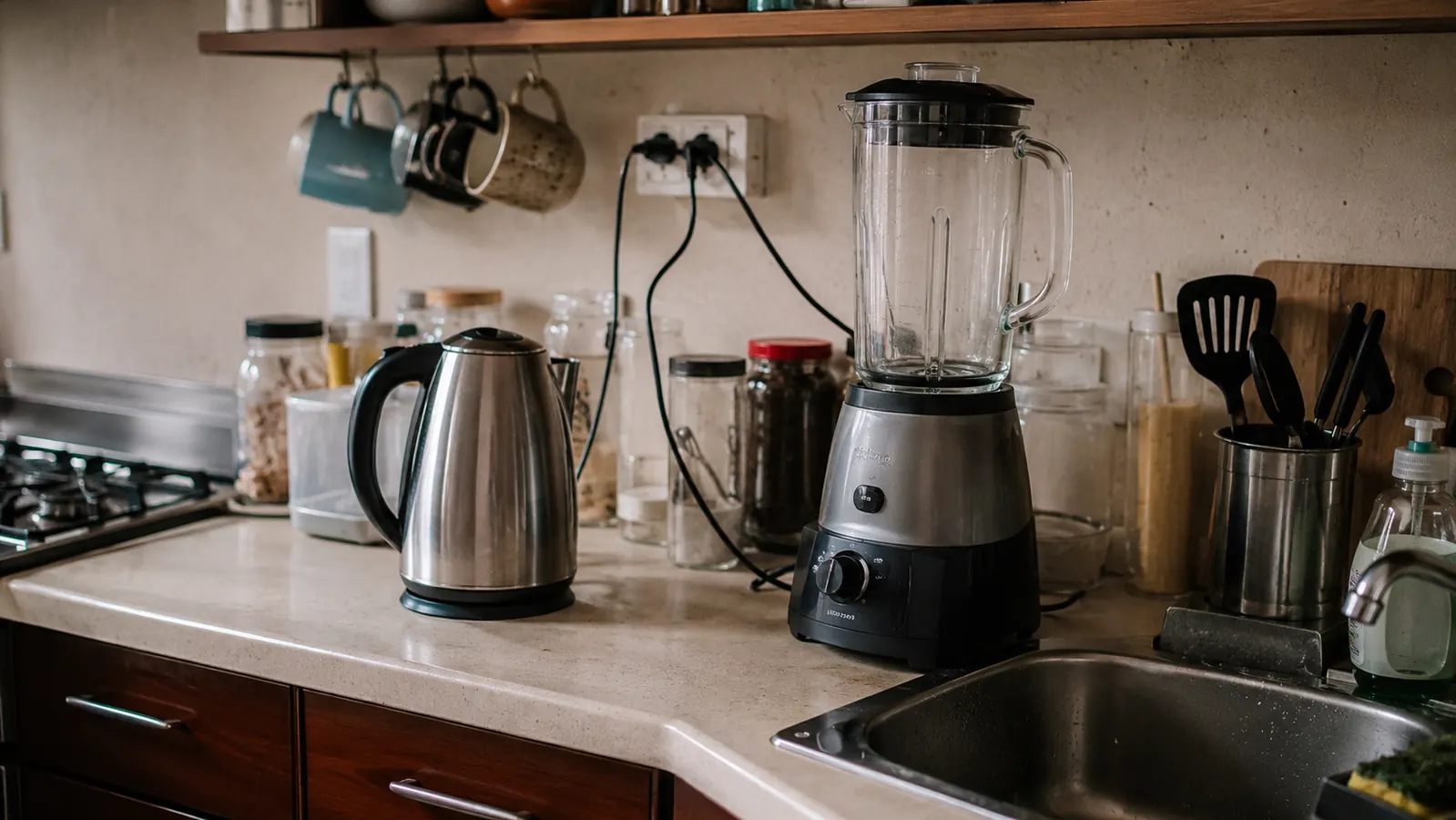
The outlet cluster is the same fight no matter which blender wins, since either one has to share that single beside-the-sink cluster with my kettle. That's a duplex problem, not a brand problem, and it would exist whether I'd bought the Ninja Mega Kitchen System or a Vitamix. What changes with the Ninja is that once it's plugged in, it's doing double duty, so I'm not unplugging a second appliance later in the day to make room for food processor work.
The Vitamix would have blended a better smoothie. The Ninja is the one that also shreds the cabbage.
Who Should Buy Which
If you already own a food processor you're happy with, or you never make anything beyond a smoothie and a soup, buy the Vitamix. You'll get a smoother puree on tough greens, a tamper that saves you from scraping the sides mid-blend, and a warranty built around years of hard daily use. That's a real, honest recommendation, not a hedge, and I'd rather tell you that upfront than pretend the Ninja wins every category.
If you're working with a counter closer to my twenty-two inches than a proper kitchen island, and you're currently juggling a separate blender and food processor the way Paul and I used to, the Ninja Mega Kitchen System is the more honest buy for a two-person household. I get into the day-to-day case for it, including the exact smoothie routine that sold me on it, in the story of how I ended up replacing two appliances with one. One base, two functions, one fewer box to store, that's the trade I made and I'd make it again.
Still Deciding Between Two Machines and One Counter?
The Ninja Mega Kitchen System won't chase a Vitamix's reputation on pure blend quality, but it's the one that also does the food processor's job, which is the difference that actually matters if your kitchen doesn't have room for two appliances.
Amazon Check Today's Price on Amazon →